Tuesday, 11 February 2014

Do we share molecules with Magellan?

First recorded circum-navigator, Ferdinand Magellan
(Credit: Wikipedia)

There is a question that gives rise to a lot of debate which is "what are the odds that we breath, eat, drink molecules of matter that have gone through someone else before?"  Here is a correct approach to the question, but a little confusing the way it is presented.

The reasoning is quite simple: for example, water is an important part of anyone's life.  So in the case of Magellan (pictured above) what are the chances for his water molecules (that he used in his life-time) to be found in a glass of water we drink, or a drop of rain from the sky?

We need to solve 2 questions,
(Q1) How many molecules circulate in anyone's body in their entire life-time?
- We know that our body regenerates entirely in 7 years.
- 60% of our body is made of water.
- We assume that our avg body weight is 50 kg in a life-time (linear increase from 0 to 20, steady weight of 80kg till 70)
- average life-time of 70 years.

H2O  (kg/life-time) = (60% x 50kg) x(70 yrs / 7yr to regenerate completely)

300 kg of water in 1 life-time.  18gm of water represents 1 mol of water molecules (6 x 10²³)
300 kg = 1028 molecules of water will circulate in the body in the entire life-time of an average person.

(Q2) How many water drops are there on earth?
- A recent survey by the US Ocean Survey concluded that there is about 1.3 x10²¹ litres of water on Earth (oceans, lakes,rivers).
- 1 drop of water is about 10mm3, or 10-5 litre (assuming the average density of water of 1gm/cm3).

So we can calculate 1.3x1026 drops of water on Earth.

Then IF we assume that all 1028 molecules of Magellan's life-time are spread evenly in the entire water reserve of Earth, we can calculate how many of these molecules are present in each drop of water on earth:

1028  / 1.3 x1026 = about 80 molecules in each drop of water.

Note: This is a quick, back-of-the-envelope calculation and therefore full of assumptions.  There are 2 main ones which would affect considerably the above number.  The first is that we assume that the 1028 in a life-time are unique molecules, however this is simply wrong, because the chances are that someone will ingest their own water molecules (localised ocean, rain, river cycle), so this number would in reality be lower.
The 2nd main assumption is that these molecules are evenly spread throughout the world, and again this is not quite right.  Possibly in time our climate and ocean currents would carry water molecules across the world, but there would always be pockets of higher concentration.  However, this is somewhat offset by the fact that in this specific example, Magellan went round the world and spent a major part of his life in India and other Portuguese colonies around the world, so his molecules of water where naturally disseminated in various places around the world.

Friday, 31 January 2014

India Awaken! The world needs you...

 A recent article (in French) from Belgian news site "L'Express" summarises a growing acceptance in the scientific community that India is the cradle of humanity as we know it. Prof. Tejraj M. Aminabhavi, winner of the Nikkei Asia 2013 prize, summarises the various contributions that have been fundamental to the evolution of humanity.  Briefly,

Maths: India is where Zero, Infinity and Pi (Indian mathematician to first estimate pi correctly using infinite series known today as the Leibniz series) where discovered, it also set the basis for algebra, arithmetic, trigonometry, and many other concepts crucial to modern technology.

Medicine: Ayurveda is the most ancient medical practice in the world, it's ancient text detail advanced notions in Anatomy, Embryology, Physiology, Genetics, Psychology, as well as information on the Immune system, the digestive apparatus and metabolism.   Furthermore, Sushruta is the first surgeon to operate with anaesthetics

Metaphysics & Astronomy:  Did you think gravity was discovered by Isaac Newton?  I did, that is what I was thought at school, at college, and everywhere really... well not quite, it was known to the Indians 1000 years earlier, mathematician Brahmagupta noted that "Bodies fall towards the earth as it is in the nature of the earth to attract bodies, just as it is in the nature of water to flow." The Earth's circumference, that it revolves around the Sun, the origin of the Universe as well as some modern Cosmological theories for the Universe... the list just goes on.
Astronomical tables for stellar movements across the skies may have already been computed 4500 years before they where discovered by western astronomers. Indian Astronomy has many first to its name, something hard to believe today.

Languages: India is not only the repository of the first languages spoken by mankind, but it gave the world many of its modern language concepts.

And much more... from religion (4 major world religions come from India, possibly even Jesus Christ may have got his teaching from India.  Yoga, Meditation, modern concept of  Consciousness.

India was the largest economy in the World for over a 1000 years before its colonisation and eventual cultural and economic destruction by Britain.

There once was a land, today known as India, source of knowledge, source of growth and development, power-house of economic strength and beacon of light for humanity.  This fact is no longer a question.  So today we can only ask, What if she awakens again from her slumber?  Imagine what India's revival could gift the world?  A world torn by strife, hunger, war, and divided and in need to enlightenment. 

India Awaken! Indian Awaken! India Awaken!

Thursday, 30 January 2014

Stop Acid Attacks on Women

Stop Acid Attacks.org is fighting to raise more awareness for this horrendous crime on women. Shame on our society to raise and harbour such coward men.
Spot  of Shame is a yearly campaign to remember women that have succumbed to such attacks.  Here are the next events  in various towns and cities across India:

Delhi: Khan Market, 22 Jan 2014
Mumbai: Bandra Station, 25 Jan 2014
Kanpur: Nawabganj, 27 Jan 2014
Unnao: 28 Jan 2014
Lucknow: 29 jan
Chennai: 30 Jan (At Eliot's beach, Besant Nagar, opposite Barista coffee shop).
Agara : 01 Feb
Panipat : 03 Feb.
Meerut : 05 Feb.


Saturday, 16 November 2013

Summarising Sustainability

A short and sweet summary of what Sustainability means. Of course, the triple bottom-line is just a story continuing from where this leaves us at...

Sunday, 20 October 2013

India among top ten countries where slavery is prevalent

30 million salves in the world

Slave labour has been officially outlawed worldwide for over a century in many countries and more recently in the last decade a number of western and African nations have made official apologies for their role in the salve trade.  However, it is estimated that close to 30 million people worldwide are still living under various forms of modern salve labour.

A recent article in The Indian Express ranks India in 4th category worldwide where salvery is still prevalent.  It is interesting to note that India is considered to have one of the best anti-slavery laws in the world, but due to poor enforcement of the laws, the practice prevails.  India has also the dubious record of the highest bondage-labour in the world, with half of the world's salve labour population being in India.  The salient points highlighted by the article are:

* With an estimated 13.9 million slaves, India is home to almost half the world's slave population.
* Almost all forms of slavery are prevalent, ranging from inter-generational bonded labor to sex trafficking, child labor and forced marriage.
* Experts say India has excellent anti-slavery laws but enforcement is sporadic and inconsistent. It remains one of the few nations not to have ratified the Worst Forms of Child Lab our Convention.

Wednesday, 11 September 2013

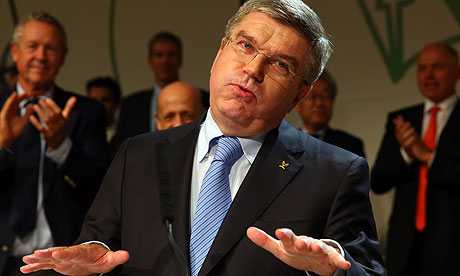
New Olympic Chief wants Unity in Diversity


Wonderful to hear the news of the new head of the IOC (International Olympic Committee) which oversees the games worldwide.  German Thomas Bach said, and I quote:
I want to lead the IOC according to my motto – unity in diversity.
Human consciousness on the rise?

International Conference on Business Social Partnership

Syllogic Consultants participated at the 2nd International Conference on Business Social Partnership organised by the ISOL foundation that promote spiritual values in businesses. The conference was held from 7-9th September at the Delhi University and saw a range of topics discussed.
We presented a paper on enabling sustainable business practices in Indian SMEs, which was warmly received by the participants as most of the topics concentrated on corporate businesses rather than small enterprises.  We were further felicitated for our on-the-ground work in making a real impact towards achieving sustainable development in rural communities.  You may review our presentation below.

We also submitted a research paper on our work which will be published in the conference proceedings.


Beautiful Delhi Flora


I was recently in the capital to attend a conference on the value-based management practices inspired from India's spiritual heritage.  I came to the city with a certain apprehension based on the many media stories surrounding the recent attacks on women as well as a sense of shame from its leaders who are not able to take a firm stance in the face of these most horrific events.  Delhi, a city of rapist, Delhi a city of misogynist, Delhi capital of all that is shameful and ugly in the Indian man.  So it was with a pleasant and refreshing outlook that I discovered a city that is much more than what the recent media has painted it to be.  From its most efficient and luxurious metro service, to its colourful fauna and its love of arts, I found Delhi to be a grand old-lady that is striving to rejuvenate itself.
Yesteryear Ambassador parked on the road side.
My first encounters with Delhi in the mid-2000s was one of heritage of a glorious past with beautiful architecture, spacious roads and a love of antique monuments preserved neatly behind manicured lawns.  The Delhi I found today inspired in me an image of an island in north India aspiring to modernity under attack from forces of obscurantism that try to stop her relentless march forward.  Taking the world-class metro service on a daily basis to attend the my conference in Delhi University, I was surprised by the beauty of Delhi women and their sense of dressing.  Being a Frenchman and having worked and travelled in countless European capitals, I have come to appreciate the sense of dressing that Parisian woman display, often regarded as epitomising women beauty in Europe.  I can say that Delhi women have nothing to envy to their Parisian counterparts.  Their sense of dressing at times took my breath away, simple, elegant and detailed down to the shoes and accessories, yet not loud.  Sri Aurobindo, a great Indian seer, talks of the importance of looking after our bodies, of dressing it with care, for he champions the idea that the body is a living temple of the Divine.  Delhi women are beautiful temples.

I Touch a face and it murders me
Of course, one may argue that my perception is a skewed selection effect of the metro's flora, and no I am not mistaking with the fauna, I mean the flora, for surely Delhi should treat its women like an ardent garndener, with love and tenderness. What would be mankind without the love of women. 

On my last day, the conference ending early, I whiled my spare time with a visit to the Delhi Art Galley in Haus Kaas, coming across one of its artist on display, Amitava, I was startled by a canvas painted back in 1989 which expressed with distinct clarity the essence of the feeling of violence that Delhi inflicts on its women.  The painting was titled "I Touch A Face And Suddenly It Murders Me".


Artist are no different to scientist, they too seek to describe the world, only the language differs.
Leaving Delhi to return to my south Indian home, I reaslised that the changes Delhi is going through, its modernisation, love of art and heritage, and an aspiration by its women to be beautiful can only reflect a deeper sub-conscious and latent aspiration of a city striving to sustain its glorious past while embracing the future.  It will take time for the men to learn to respect and love the contribution of woman to this world, but it is ironic that behind such shameful and careless men lie a mother that has spoilt her male-child, and so it is important that women too take responsibility and change the way men are brought up in our society.
People actually queue in the crowded metro stations, a first in India!
It is surprising the number of peddle rickshaws that ply the small streets of the older city
An other pleasant surprise is the introduction of electric shared autos
Always a lemon juice vendor on the crowsded street corners

Sunday, 8 September 2013

A look at life

An interesting little post celebrating Calvin & Hobbes.
Bill Watterson retired from writing and drawing "Calvin & Hobbes" about 18 years ago, but the timelessness of his message -- to always remain thoughtful, imaginative, and playful -- will stick in our culture forever, if we're lucky. Case in point: Cartoonist Gavin Aung Than, who pens comics on his blog Zen Pencils, created this tribute to Watterson that has struck a chord with the Internet over the last few days.
I think the cartoon speaks for itself, and an inspiration for all of us seeking to make a positive contribution to the world we live in.

Monday, 24 June 2013

The Farce of GM Food Economics


We live in a bizarre world, where those out to make a quick profit on the back of dying farmers sponsor global prizes that they award to themselves in the hope of what?  Pacifying their conscience? Eye-washing the consumer society?

Monsanto, Syngenta (better known for the neonicotinoid insecticides responsible behind the recent drop in bee population worldwide) and other GM seed companies has been awarded the World Food Prize for their contribution in feeding the world!  What a joke!

The news coming out form independent research is being stifled in order to protect these companies commercial interest.  World wide, the Bt gene introduced in a variety of crops (in India: Bt bringal, Bt tomato, Bt corn, Bt cotton) is giving rise to an evolution in insects resistant to the gene, effectively creating a time-bomb waiting to explode.  The frightening face of GM crops is that it was created to resist herbicides, allowing farmers to use stronger more potent herbicides that the crop could resist and other herbs killed off.  Use of herbicides have increased compared to non-GM crops, and these have been harsher and more poisonous.  The use of GM crop has had the effect of increasing the pollution in the land and waterways.

The rise of resistance to Bt genes among insects means that farmers will now revert to using chemical insecticides, and since our legislators and politicians have handed over the control of our agriculture to these GM companies, traditional seeds have been removed from the market in order to monopolise it.  We are left with an agriculture that is immensely worse off than 2o years ago.

What a miracle!  And these geniuses have the audacity to sponsor the World Food Prize in order to award it to themselves. 

Thursday, 20 June 2013

The art of Green-(eye)-washing


Is Nike a green brand, or Nestle, or even Coca-Col, or for that matter Shell (an oil company)??? One wouldn't really think so a priori.Yet, according to highly mediatised report by Interbrand, these are among the top 50 greenest brands in the world, or so they would like you to believe.

A new report by brand value management company Interbrand, a US based Media company that compiles reports on global companies.  The report, titled Best Global Green Brands 2013, has been conveniently marketed in world Media as the greenest brands in the world (see sample articles, here, here and here.

The methodology used in the above report is a little thin on details, although it contains the right vocabulary.  However, like all statistical analysis, much and anything can be conveyed and obtained from statistics, it all depends on how objective one is.  So without knowing who is sponsoring this report, it is difficult to evaluate its authenticity.  If you look at the clients of Interbrand (the company behind the report) many of them are global multinationals.

Another interesting aspect of this report is that it has only been applied to the top 100 global brands (selected in terms of brand value, economic profit, brand strength and role of brand) in other words we are talking about the most valued companies.  Top 50 Greenest brands are not the most sustainable brands, but rather the most sustainable of the most economically successful brands).
The nominees are drawn from Interbrand’s annual Best Global Brands report, which ranks the world’s 100 most valuable brands. (Quote from Interbrand report methodology.)

This finer point is conveniently left out of their Media report, letting consumers believe these are the greenest brands in the world.  So yet again, a lovely marketing eye wash that lets me believe that this report has been financed by top global brands as yet another exercise in Green-(eye)-washing.

Monday, 10 June 2013

The Green People of India

A new movement has been launched in India to bring together eco-companies that strive for a more sustainable choice in our lifestyle for our society.  The Green People of India (TGPI) has launched a preliminary site, www.thegreenpeople.in, that will eventually serve the purpose of informing and empowering Indian consumers on their choices for a more eco-friendly and sustainable future, but also as a platform for exchange and communication between eco-companies in India.

The Green Festival

 TGPI has succefully completed its first green festival held in Mumbai from the 7th to 9th June.  as you can see from the photos and videos below it was a lot of fun.
We had the support of actors Kalki and Gulshan or Shaitan fame.

It was green and it was fun with impromptu jamming sessions from Mouth Harp maestro Nepture Chapotin.

With lots of stalls and very interesting products on display from clothes, to food to cosmetics and other household items.


Monday, 27 May 2013

Sustainable Growth for the Enterprise

At Syllogic we explore ways in which sustainable growth can be achieved in business, in an integral and inclusive way.  Here is the latest on this research.

Thursday, 2 May 2013

3rd Generation High Speed Train is most efficient


Promised to revolutionise public transport in France, the TGV trains developed by national train carrier SNCF in collaboration with Alstom in 1981 delivered just that.

Today, the 3rd generation, the AGV (the name change is fundamentally linked to its revolutionary technology), allows for an even more efficient mode of transport.  Operating at speeds of 350 km/hr and linking various Italian cities, the AGV has got rid of its engines, each wheel now having its own motor and therefore allowing the entire train to be used for carrying passenger. 
 
Furthermore, the train can now be configured to take up 300 to 600 passengers by changing the number of rail cars attached together.  There is plan to enable an even longer train with a capacity of 1200 passengers.


The train boast an incredible 2.2 gr of CO2 per passenger/km, a record when compared to other modes of transport.  This is due in part to the special brakes on the train that recuperates the energy and puts it back on the electric grid.


Much research has gone into the aero-acoustic properties of the design to allow for a much quieter and comfortable journey.  An interesting fact is that a train that travels at 330 km/h creates twice as much noise as one travelling at 300 km/h.  The design elements of the train has allowed it to travel at 360km/h while preserving acoustic properties of trains travelling at 300km/h.

Already in operation in Italy, AGV will be introduced in France in 2014.

Tuesday, 23 April 2013

Gratitude

A beautiful film on the importance of cultivating gratitude for what is given to us.  An attitude to be cultivated for a sustainable enterprise in life.

Thursday, 18 April 2013

Putting a spin on Cotton

Hand picked cotton from India fed the English Industrial revolution... at what cost?
Microsping start-up is all geared to introduce a micro-revolution in the cotton industry.  In order to understand why, we need to go back a in time in order to set the tone...

It is 1740, India is under the grip of the East India Company.  To tap into the economic potential of their Jewel in the Crown, rail-roads, bridges, canals and ports are developed in order to facilitate the transport of raw Cotton from India's hinterland to the ports on the west coast.  The systematic plunder of the country leads to to the great famine of 1770.  Towards the turn of the century, British textile mills are now so mechanised that in order to feed this mammoth industry, American cotton (cheaper and of better quality) is imported.  In order to ship cotton, it has to be packed into bales, a manual process in India that requires over 600 man-hours per bale.  The cotton export in India slows down, unable to compete with the Americans.  The American civil-war quickly turns the tables as blockades of southern American ports by the confederates stops the supply of the raw material to the English mills.  For a while the English industry turn to Egyptian cotton, eventually leading to that nation's bankruptcy.

In the mean time, India's cotton production had vastly improved and much effort was put in by the colonial rulers to reduce the price of export to a minimum with mechanised baling.  The situation was aptly summarised by Gandhi,

  1. English people buy Indian cotton in the field, picked by Indian labor at seven cents a day, through an optional monopoly.
  2. This cotton is shipped on British ships, a three-week journey across the Indian Ocean, down the Red Sea, across the Mediterranean, through Gibraltar, across the Bay of Biscay and the Atlantic Ocean to London. One hundred per cent profit on this freight is regarded as small.
  3. The cotton is turned into cloth in Lancashire. You pay shilling wages instead of Indian pennies to your workers. The English worker not only has the advantage of better wages, but the steel companies of England get the profit of building the factories and machines. Wages; profits; all these are spent in England.
  4. The finished product is sent back to India at European shipping rates, once again on British ships. The captains, officers, sailors of these ships, whose wages must be paid, are English. The only Indians who profit are a few lascars who do the dirty work on the boats for a few cents a day.
  5. The cloth is finally sold back to the kings and landlords of India who got the money to buy this expensive cloth out of the poor peasants of India who worked at seven cents a day. (Fisher 1932 pp 154–156)
 This further ruined the country, leaving its footprint and consequences long after the English masters had departed.

The legacy

Cotton trucked to baling factories

Today, Indian cotton industry relies on the legacy of its British masters.   The commercial cotton industry has not evolved for lack of leadership and innovation.  Cotton is trucked to a baling facility (an energy intensive process), the bales are carried to cotton mills that unpack the bales (another energy intensive process) and finally spun and weaved into yarn.  Bales where introduced specifically to address shipping issues to English mills.  So why do we still bale cotton when spinning and weaving is relative stone throw from the cotton fields?

Spinning a new era

Enters Microspin, a small Chennai based start-up company that is turning the industry on its head.  The concept behind Microspin's business model is simplicity and efficiency.  Get rid of the baling process!  Spin the cotton next to where its grown by introducing micro-spin setups using electronic controls to lower the energy cost and render the process more efficient.  Not only does the model makes perfect sense in light of the history of cotton farming in India, but the greatest contribution is the value addition the farmers can leverage with this set up, allowing them to sell spun cotton at a higher cost than the raw material.

Tuesday, 9 April 2013

Sustainable Rural Care

Dental check up camp in action in a rural school

Teaching children about oral health

A beautiful story from Tamil Nadu, south India.  For the last 20 odd years, a group of intrepid dental workers have laboured to change the rural reality of their local villages.  ADCERRA is a project started by French dentist, Dr. Jacques Verre, devotee of Sri Aurobindo and The Mother, settled in Auroville, he has trained rural women to be health workers and disseminate the importance of oral health in surrounding villages of the Auroville bio-region.  Their labour of love is beautifully illustrated in this short film that has recently being released.

Your Smile is Precious from Rakhal on Vimeo.

Friday, 5 April 2013

Towards democratisation of education


An interesting story picked up from geek news portal /. introduces a new AI system that will grade students essays at the click of button, enabling teachers to take break but also allowing for a more transparent grading system.  This system will be accessible online through edX's free online courses portal.  The system will also allow students to retake the test in order to improve their score.  We can imagine a world where such scores will be taken as reference for eligibility to further education or even job applications.  The work was carried out by edX, a nonprofit collaboration between MIT and Havard.

Friday, 22 March 2013

Chennai Organic farm, Nalla Keerai, sprouting wings

Ladies-fingers/Okra/Bindi/Pottu
As we reported sometime back about a new organic farm in the outskirts of Chennai, Nalla Keerai (good greens/spinach in Tamil) is now ready to spread the love of their efforts to Chennai residents.  They are calling for suggestions for a list of 10 parks within Chennai to which they will deliver early morning fresh organic keerai for customers to buy.  So to your keyboards and send your suggestions if you love organic greens.  You can vote for your park either through their email (NallaKeerai at gmail.com) or via their Facebook page.

Red Ladies-fingers/Okra/Bindi/Pottu look lovely

Love & consciousness are important ingredients, fertile soil is contained in small cultivable patches
Jagannathan, organic farmer with a passion
Some wonderful Keerai
Greens are not always green!


Wednesday, 13 March 2013

A few good men

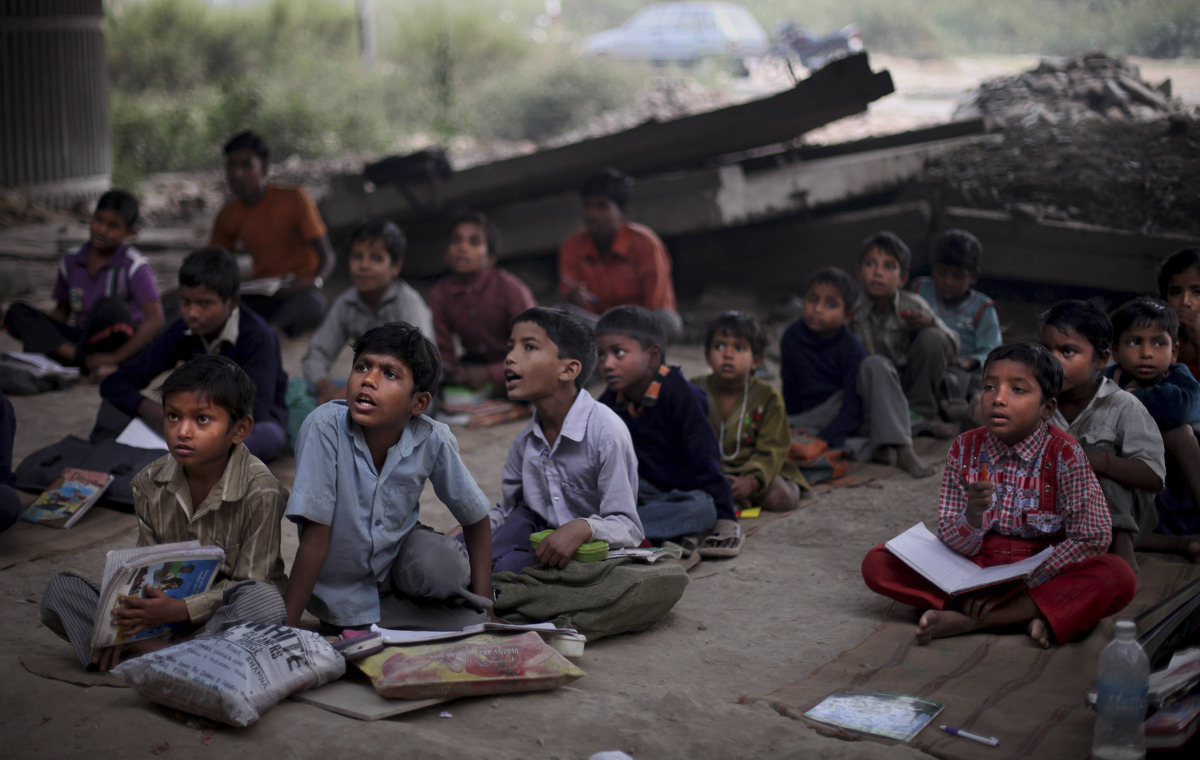
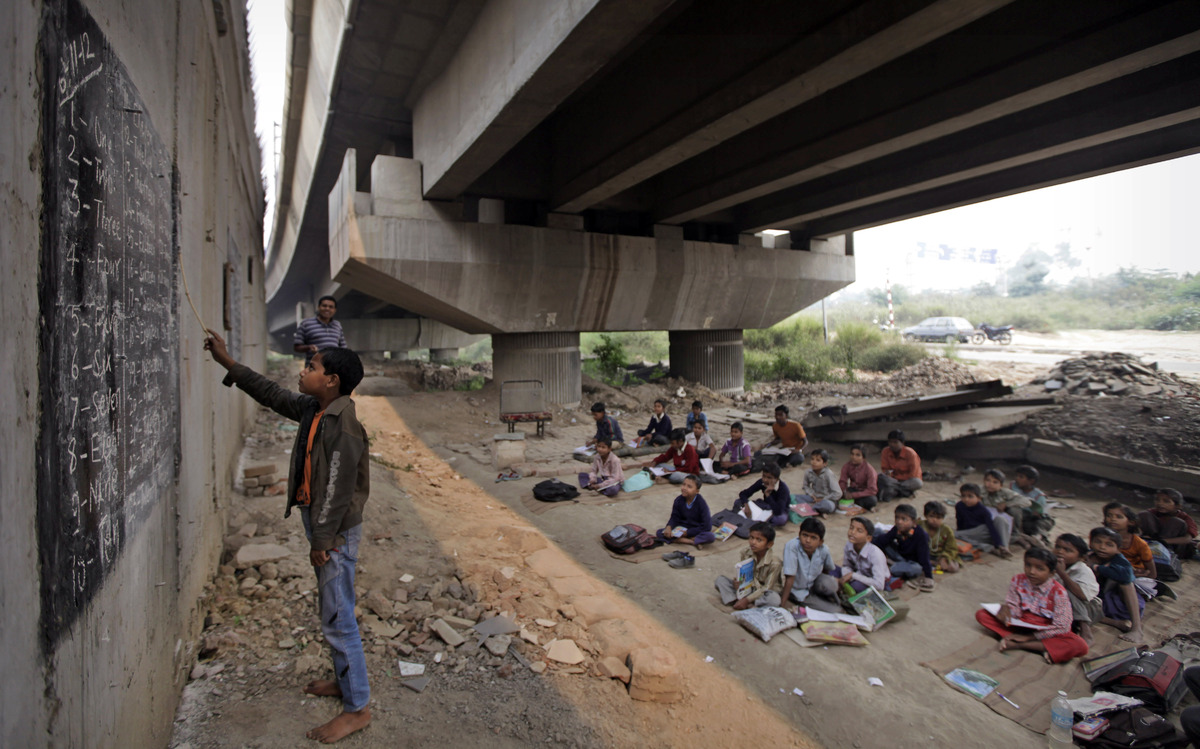
Under a metro bridge in the capital Delhi, a few unsung heroes are changing the lives of underprivileged children, one chalk mark at a time.  The story, as told by the teachers is touching and shows the potential for change that a few people with aspiration and determination can bring about.